
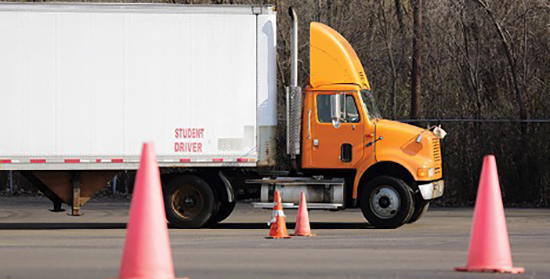
Following the release of the Auditor General of Ontario’s Special Report on Commercial Truck Driver Licensing, Ontario Trucking Association (OTA) President and CEO Stephen Laskowski issued a direct indictment of the oversight gaps allowing “bad actors” to undermine highway safety, while stressing these findings should not tarnish the reputation of the province’s thousands of dedicated professional drivers.
The report confirms the OTA’s long-standing warnings and echoes the Association’s Stop Illegal Trucking campaign regarding a systemic disregard for public safety by a subset of the industry. The OTA for years has called on a crackdown on carriers and training facilities engaged in widespread fraud, who take advantage of the lack of oversight, which has allowed “ghost” schools and unsafe fleets to proliferate and flourish within the province.
“While the Auditor General’s findings are chilling, they are, quite frankly, not surprising to those of us on the front lines,” said Laskowski. “For years, the OTA has been warning about the lawlessness growing throughout our sector. Learning that some training providers are delivering barely 60 percent of mandatory instruction and failing to teach critical basic skills is an insult to the public and the thousands of elite, professional truck drivers who take price in doing the job safely every day.
“These fly-by-night truck driver training providers and the bad across in the fleet community who have no qualms about hiring untrained drivers and putting them on the road next to the travelling public, are tarnishing the reputation of the committed professionals who keep our economy moving safely.”
The OTA acknowledges the recognition by the Ministry of Transportation (MTO) that the status quo cannot continue and Minister of Transportation Prabmeet Sarkaria’s commitment to elevate truck safety.
OTA confirmed a meeting between the minister, OTA and other stakeholders will take place June 4, 2026. “We plan on highlighting the rot in our sector, implement solutions, and set hard timelines for change in the fleet and driver training community,” said Laskowski.
OTA Reaction to AG Report:
- The report reveals a staggering lack of enforcement. While the Auditor General found that 25% of sampled training schools had never been inspected, the situation is even more dire for trucking fleets, where a shocking 80 percent remain uninspected by the MTO. Neither of these numbers is acceptable, says OTA.
- The report documents rampant “paper-milling,” where training records are systematically falsified to bypass provincial standards. This is exacerbated by a “cost of doing business” mentality, where low fines act as nothing more than a minor licensing fee for those intentionally disregarding the law.
- Unregistered “Ghost” Colleges: The OTA is alarmed by findings of unregistered training entities operating in the shadows of registered colleges, bypassing even the most basic government oversight and putting unskilled drivers on our highways.
- The “Driver Inc.” Connection: The report correctly links poor training to the “Driver Inc.” model and the rise of unsafe fleets. The chaos in our sector, says OTA, is a direct result of a lack of oversight that allows fleets to employ unskilled drivers who have never been properly vetted. Data from the Auditor General’s 2026 report reveals that a rise in safety violations outpaces increased inspections, correlating to a surge in unsafe vehicles. This trend highlights the 24/7 inspection gap and the prevalence of unskilled drivers in the “Driver Inc.” model, stemming from inadequate oversight of fleets and training schools.
The Path Forward
The OTA is calling for a direct call to action from the province: “If you want to clean up our industry, the path is clear and it requires three things: First, act immediately on the Auditor General’s recommendations. Second, move all inspection stations to 24/7 operations to ensure there is no ‘off clock’ period for truck safety on our roadways. Third, you must end the ‘Satisfactory Unaudited’ status for carriers,” says Laskowski.