
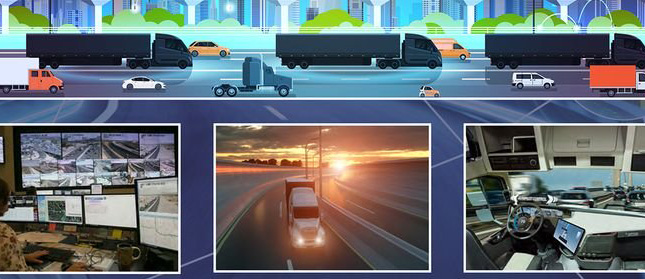
The following editorial by CTA president Stephen Laskowski was featured in The Future Economy
The trucking industry isn’t going anywhere. It may evolve with technology—but until we reach the world of Star Trek, where freight is beamed from one city to the next, goods will continue to move by truck, train, boat, or plane. In Canada, most domestic freight and trade with the US moves by truck—more specifically, by the hard-working, professional driver behind the wheel.
Automation and Reality
Autonomous, driverless trucks—powered by AI and robotics—may one day change that. But until those technologies are perfected, aligned and adapted to Canada’s unique topography, ever-changing weather, gaps in infrastructure—and most importantly, deemed safe and acceptable by the public and policymakers—the human behind the wheel will remain the lifeblood of the Canadian economy in one capacity or another. I believe we’re still a long way from changing that reality.
That’s why the conversation about AI and automation in trucking is complex and somewhat ambiguous. It threatens the livelihood of over 300,000 Canadians who make their living moving freight as long-haul truck drivers (and the hundreds of thousands more doing local and regional delivery). Replacing that many people isn’t just an economic shock—it ruptures the tectonic plates supporting our social fabric, on which we all depend. Politicians, manufacturers, and trade associations must understand that when we talk about automation, we’re not just talking about efficiency—we’re talking about people’s futures.
And yet, here’s a hard truth that most truck drivers would probably agree with: if AI robots ever do take over our roadways, it stands to reason they can’t be exploited by governments which allow the expansion of the underground economy, where unscrupulous fleet owners prey on workers by scoffing at labour and tax laws. Because that’s exactly what’s happening now.
The Real Threat: Politics, Not Technology
Let’s be clear: the future of labour in trucking isn’t being determined by technology like in other industries. It’s being shaped by a lack of government oversight and political will to get serious about ending organized corruption and deliberate non-compliance in our industry. That’s what’s driving the chaos in our sector.
How Did We Get Here?
Back in 2011, the federal government quietly issued a temporary moratorium on enforcing T4A forms—the documents that report payments to contractors to the CRA. That “temporary” pause is now entering its 14th year. Whether that’s indecision or political interference, I’ll let CRA officials or politicians answer for themselves. But let’s be honest—14 years is neither temporary nor acceptable when the consequences are this severe.
So, what happened in trucking as a result? In 2011, the Personal Services Business (PSB) tax category was barely used in our industry. In 2025, trucking is now the number one user of that classification—even though PSBs get no small business deductions, fall into some of the highest tax brackets, and are denied protections under the Canada Labour Code. In other words, it is a gross, widespread misapplication of the PSB model in an industry where it doesn’t make any economic sense for anyone who files and pays their taxes properly. Why would any worker choose this? Simple—they don’t. They’re told it’s the only option if they want the job.
The Underground Labour Economy
This brings us to the labour side of the underground economy. ESDC has already acknowledged that most PSBs in trucking are actually employees—misclassified, plain and simple. And yet, enforcement is minimal and penalties, when they do occur, are just a rounding error for many of these carriers that gain so many more unfair advantages by breaking the law. Enforcement is nowhere near enough to reverse this crisis. Yes, it is a crisis.
Try hiring an employee driver in certain regions of the country today. If you’re not offering an underground PSB “package,” up to 80% of candidates will walk away. Combine that with the cost savings for employers who dodge payroll taxes and WSIB premiums, and countless other payroll expenses, and honest fleets simply can’t compete. Many are either being forced to adopt these shady practices or are slowly going out of business.
The Human Cost
And let’s not ignore the human cost. A disproportionate number of these misclassified drivers are newcomers to Canada, often forced to work at 1980s-level wages. Even US border officials have flagged this exploitation in visa interviews—incredulously asking, “What is going on in Canada?” Meanwhile, Ottawa says very little.
In 2022, the Fall Economic Statement promised that the 2023 federal budget would address this growing tax and labour abuse crisis. It didn’t. The budget came and went without a word about it. There’s been silence from Ottawa and most provinces ever since. Why? Political pressure often keeps leaders from doing the right thing.
The Real Future of Labour in Trucking
So next time someone asks you what robotics or driverless vehicles might do to the future of trucking, tell them this: the future of labour in trucking is already a mess—and it has nothing to do with AI or robots. It’s being undermined by political horse-trading, inaction, and a refusal to enforce the very laws that are supposed to protect workers and ensure fairness.
The only ones suffering are law-abiding truckers and honest fleet owners who believed politicians when they said the rules mattered.
A Call to Action
Our hope? The Government of Canada will care less about politics and more about fixing the crisis undermining Canada’s largest freight transportation sector by doing something incredibly simple: enforcing the law.
You don’t need futuristic technology to clean up this industry; you just need the courage to act.
Essentially, our hope is that the Government of Canada will put politics aside, resist political pressure and put some real effort into fixing the crisis undermining Canada’s largest freight transportation sector by doing something incredibly simple:
- Enforce the law and rules already on the books designed to combat misclassification, tax avoidance, labour abuse, and other forms of non-compliance and illegal activity
- End the 2011 moratorium on the issuance of mandatory T4A and require carriers to report all contractor payments to the CRA
- Provide resources to increase audits on carriers using PSBs and mislabelled drivers as employees, as well as drivers wrongly filing as PSBs
- Impose real penalties and punitive fines for violators, with retroactive penalties for tax evasion by carriers who avoided payroll taxes, WSIB premiums, and CPP/EI contributions through misclassification